
.jpeg)
Gallery
.jpeg)
.jpeg)
.jpeg)
.jpeg)
.jpeg)
History
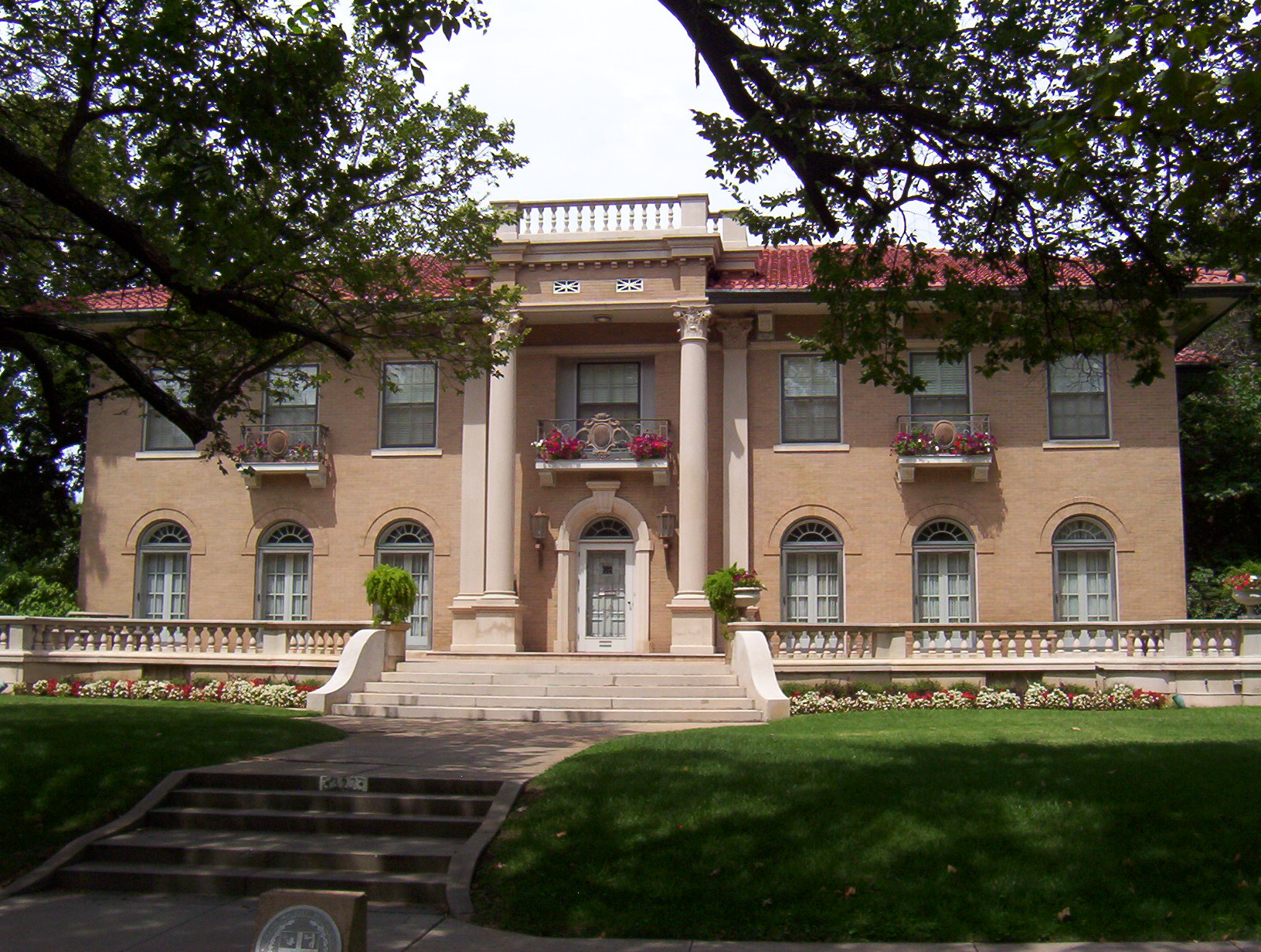
Next to the Overholser Mansion, this is the most famous home in Heritage Hills. It belonged to the "king of the wildcatters"; it was the site of a daring daylight kidnapping that made headlines across the country; and it was the home of Oklahoma's most successful and enduring politician.
Although referred to in history books as the Slick/Urschel/Kerr Home, it was actually built in 1922 by Mrs. Willie Bass, the widow of James Milton Bass, a pioneer merchant who came to Oklahoma City in 1902 and organized a furniture store in partnership with J. Franklin Harbour. By the time of his death in 1921, James Bass operated furniture stores in four cities, owned several office buildings, and had investments in oil and farming.
Mrs. Bass, soon after the death of her husband, bought the lots on 18th for $5,750, took out a building permit for $22,500, and hired contractor F.M. Ray to build a new home. It was a massive two-story brick designed with the formal appearance of Mediterranean and Neo-classical styles. The south side exterior was dominated by the main entryway, a triumph in Neoclassical design framed by monumental Corinthian columns and topped by a balustrade balcony.
Mrs. Bass lived in the home only a short time, then sold it to Mr. and Mrs. Thomas Slick in 1927. Slick, a native of Pennsylvania, was one of the most famous wildcat oilmen in the nation. He came to Oklahoma in 1911, only to drill several dry holes. Then, on March 12, 1912, using borrowed money, he hit a gusher and opened the largest oil patch in the nation, the Cushing Oil Field. By the time he bought the house on 18th, Slick was known as "King of the Wildcatters."
After moving to Oklahoma City, Slick continued his good fortunes. When the Oklahoma City Field blew in, he became the second largest producer and leaseholder in what became the most prolific field in Oklahoma history. By 1929, with 45 producing wells and 8,000 acres under lease, Slick sold half of his operations for $40 million.
This good fortune ended in tragedy, for in 1930 Slick died, leaving his company to his wife Bernice, sister Florence, and brother-in-law Charles Urschel. A year later Florence died, and by 1932 Urshel had married Slick's widow, Bernice, and moved into the mansion on 18th.
In October of 1932 their young marriage was jolted when notorious gangster Machine Gun Kelley and his gang made a daring daylight raid on the house and kidnapped Urschel. Soon, a demand for $200,000 in ransom was received. After a tense week in the national spotlight, the ransom was paid and Urschel was released. Using information provided by the oilman, the FBI captured Kelley and his gang.
After the kidnapping the Urschels built the northwest wing of the house with a large kitchen and butler's pantry downstairs and a bed and bathroom upstairs. Matching stone was used to make the addition identical to the original.
In 1946 the home was sold to Grayce and Robert S. Kerr. Robert, a native of Ada who was an attorney and oilman, had completed a term as governor and was just beginning his first campaign for the U.S. Senate. After his election in 1948,the Kerrs became part-time occupants of the house. For the next nine years they kept a full-time housekeeper at the house and entertained often when back from Washington.
In 1957 the Kerrs sold the home to Mr. and Mrs. Tom Harris. Harris had come to Oklahoma City to become vice president and general manager of Aero-Commander, an innovative aviation firm that set new altitude and performance records. He later ran unsuccessfully for the U.S. Senate and organized an aviation consulting company. They furnished the home with period pieces purchased from estate sales and antique shops. Today, the awe inspiring, Neoclassical giant still hovers over the streetscape, as if it has a story to tell.
Home Info
Street:
Northwest 18th Street
Block:
300 Block of NW 18th Street
Year Built:
1922
Owners:
Historic Photo:
Audio Tour:
Looking for some excitement?
Let's roam the neighborhood, explore, and connect with others.


.svg)
© 2020 Heritage Hills Walking Tour. Website Design by Center Point Designs, LLC